Sensor-led automation
The core behaviour is driven by measured conditions, which makes the system more adaptable than timer-based watering alone.
Case study / Personal project
A sensor-driven plant care prototype that combines embedded programming, environmental control, and a monitoring interface to automate day-to-day plant management.
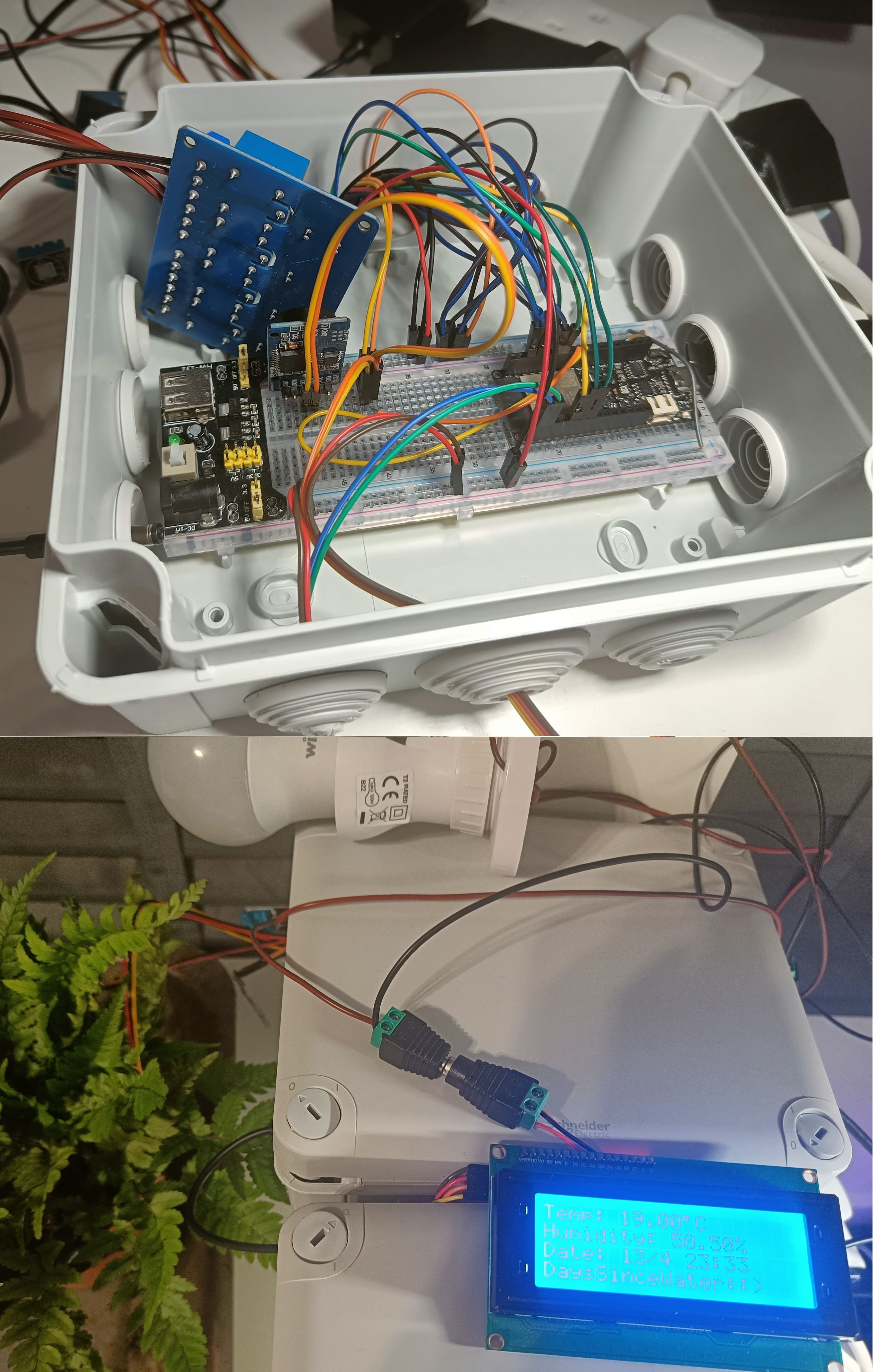
A prototype that links sensors, control logic, and software visibility into one plant-care workflow.
Static watering schedules ignore the real condition of the plant and its environment. I wanted a system that could react to live sensor data, keep the environment stable, and give useful visibility into what the hardware was doing.
01. Built the control loop around environmental sensor readings rather than a fixed schedule, so watering decisions could respond to actual conditions.
02. Combined Arduino and ESP32 work with a lightweight web interface to surface readings, graph behaviour, and make the system easier to reason about from software as well as hardware.
03. Used predictive logic and control-system thinking to balance watering, lighting, and temperature instead of treating each variable as an isolated feature.
The core behaviour is driven by measured conditions, which makes the system more adaptable than timer-based watering alone.
Logistic regression and KNN were used to inform watering decisions, giving the prototype a more analytical basis than a simple threshold script.
A PID-based control system handled temperature and lighting so the project could operate as a broader plant-care system, not only a pump trigger.